As an Amazon Associate I earn from qualifying purchases.
Most people who say they do not like matcha have only had it made badly. Two mistakes account for nearly all of it: water that was too hot, and powder that was never sifted. Both take seconds to fix and neither has anything to do with how much you spent on the tea.
The equipment matters because of physics rather than tradition. A bamboo whisk has a hundred flexible tines that shear the powder against the rough inside of a wide bowl — that is what builds the fine, stable foam. A fork in a mug cannot do it, and neither can a metal whisk.
Twenty-five pieces below, sorted by what they change in the cup. The first section is where to start. The last section is where bitter matcha gets fixed.
The temperature rule: 75–80°C, never boiling. Above that the L-theanine and amino acids that give matcha its sweetness break down and the catechins dominate, which is the harsh, bitter taste most people blame on the powder. If you have no temperature-controlled kettle, boil and then wait two minutes — it is not precise, but it is far better than pouring straight from the boil.
Start with a proper set
You can make matcha in a mug with a fork. It will be lumpy, bitter and thin, and you will conclude that you do not like matcha. The bowl and the whisk are not ceremony — they are the mechanism. A wide bowl gives the whisk room, and a rough interior breaks up the powder as it passes.
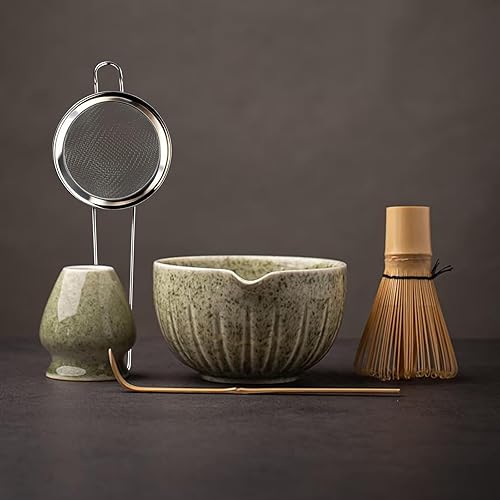
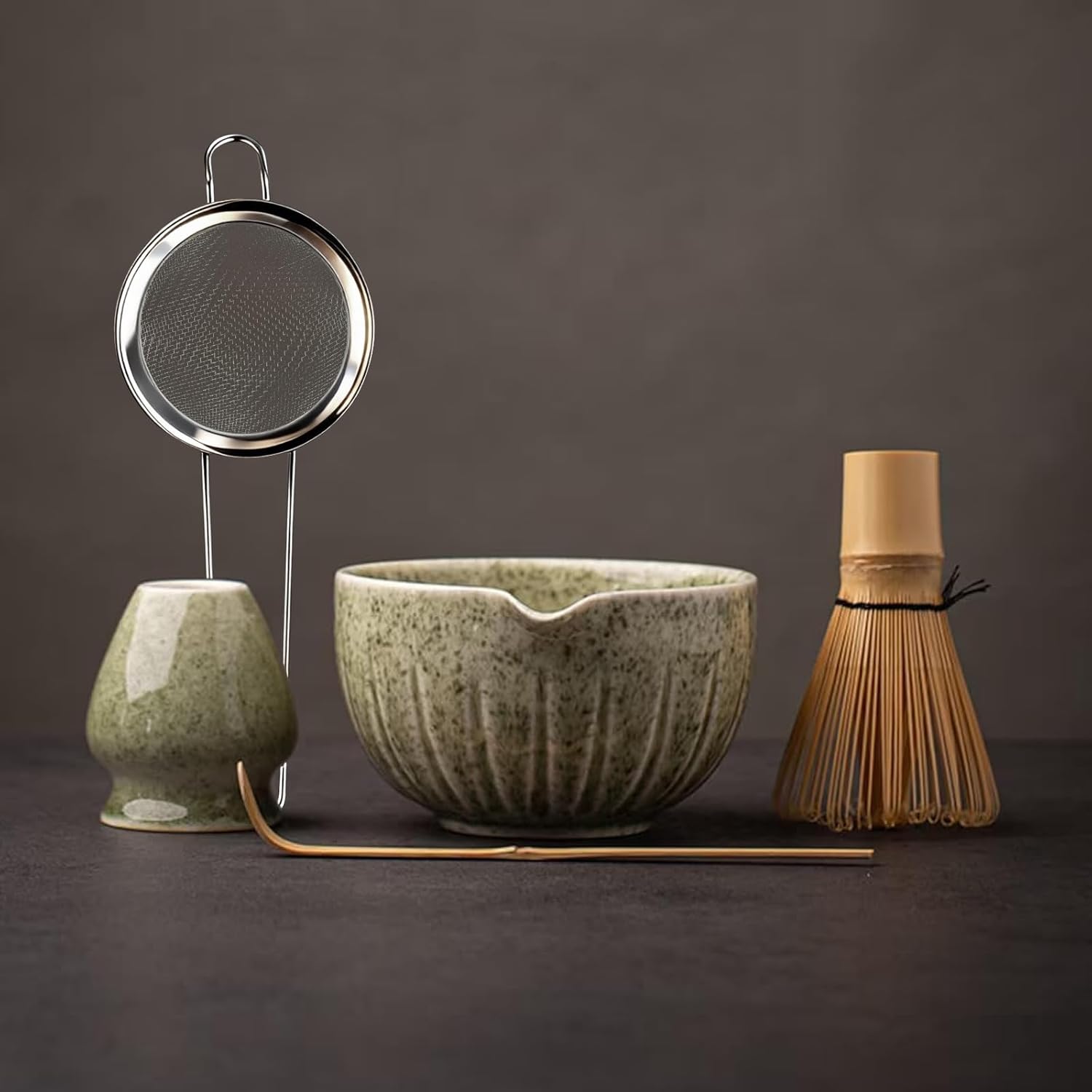
TANG PIN Matcha Set, Bowl and Whisk
Thirteen hundred ratings and the set most people should start with. Bowl, whisk, holder and scoop, sized so the whisk has room to move — the mistake beginners make is buying a bowl too small and then wondering why the foam never builds.
Check Price on Amazon
Matcha Whisk Set with Ceramic Bowl and Bamboo Chasen
The bowl is the piece worth spending on. A proper chawan is wide, shallow and slightly rough inside, and that texture is what breaks up the powder. A smooth mug will never give you the same foam no matter how hard you whisk.
Check Price on Amazon
Matcha Whisk Set with 2-Pack Bamboo Whisks
Bamboo whisks are consumables — tines snap, and after a few hundred bowls one is noticeably softer. Getting two in the box means the second is waiting rather than being ordered in a hurry. Six hundred ratings at 4.7.
Check Price on Amazon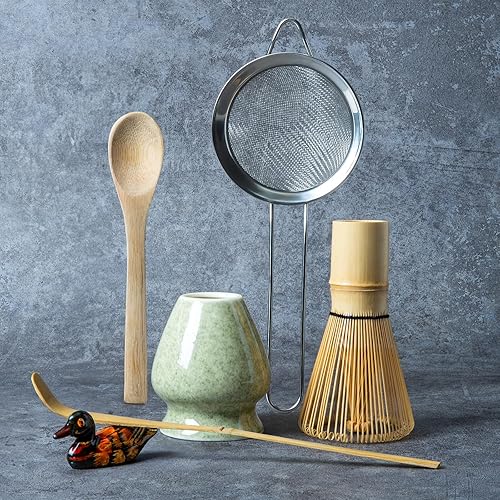
Matcha Whisk Set, Matcha Making Kit with Chasen
The volume seller, and it holds a 4.5 across more than a thousand ratings. Everything you need to make a bowl properly on day one, at a price that makes it an easy gift for someone who has been drinking matcha from sachets.
Check Price on Amazon
Matcha Whisk Set with Bowl and Accessories
A smaller footprint for a counter that is already full. Everything nests into the bowl, which is the detail that decides whether a matcha set stays out on display or disappears into a cupboard and stops being used.
Check Price on Amazon
Matcha Whisk Set, Japanese Tea Set, 5 Pieces
Bowl, whisk, holder, scoop and sifter — the full traditional lineup. The sifter is the piece kits usually leave out and the one that removes clumps before the water goes in, which is how you get a smooth bowl instead of a lumpy one.
Check Price on Amazon
YIBO Matcha Whisk Set With Ceramic Bowl
An honest entry-level set: the ceramic is thinner than the premium bowls and the whisk has fewer tines, but everything works and nothing about it will put a beginner off. Upgrade the whisk first when you are ready.
Check Price on Amazon
Fellow Matcha Set, 6-Piece Ceramic
Fellow design coffee equipment that people leave on the counter on purpose, and this is their take on matcha. Rating is lower and the review count is small because the listing is new — buy it for the object, not because the crowd has voted.
Check Price on Amazon
7-Piece Matcha Whisk Set, 72-Tine Bamboo Chasen
Seventy-two tines rather than the usual hundred-count marketing number or the forty-tine budget version. More tines means finer bubbles and a denser head; it also means a more fragile whisk. A good second set once you know you will keep drinking it.
Check Price on AmazonThe whisk, the holder and the step everyone skips
A chasen is a consumable, and the single thing that extends its life is drying it over a holder instead of flat in a drawer. The other overlooked piece is the sifter: eight seconds of sifting is the difference between a smooth bowl and a gritty one.

SHONMISEN Bamboo Matcha Whisk Set with Holder
The holder is not decoration. A chasen dried flat splays and the tines set in the wrong shape permanently; dried over a ceramic holder it keeps its curve and lasts several times longer. Nine hundred ratings and the cheapest way to protect a whisk.
Check Price on Amazon
Handcrafted Bamboo Matcha Whisk
A single whisk, hand-cut from one piece of bamboo the way it has been made for four hundred years. Replace-only purchase for anyone who already owns a bowl and has just snapped some tines.
Check Price on Amazon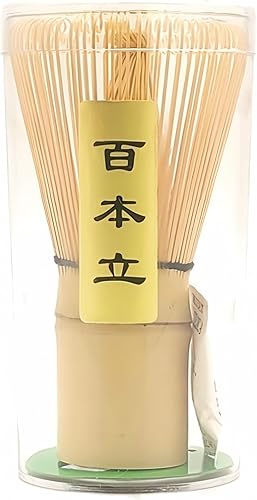
Bamboo Whisk for Matcha Powder
Eleven hundred ratings on a replacement whisk, which tells you how often people need one. Rating is lower than the premium whisks and that is fair — the bamboo is softer. For daily drinking where the whisk is a consumable, it is the sensible choice.
Check Price on Amazon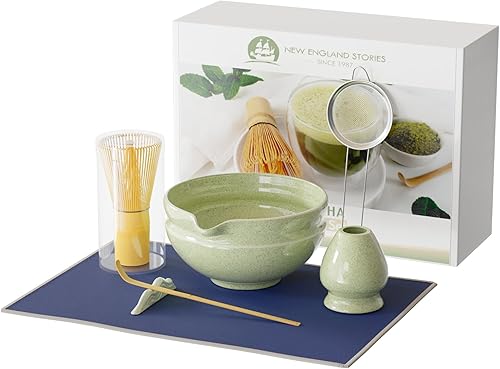
Matcha Whisk Set, Matcha Kit with Sifter
Sifting is the step everyone skips and it takes eight seconds. Matcha compacts in the tin and the clumps do not dissolve — they break up into grit. Push it through a fine mesh first and the difference in texture is immediate.
Check Price on Amazon
Glass Matcha Whisk Holder, Chasen Stand
Glass rather than ceramic, so the whisk is visible rather than hidden. A small thing, but a chasen is a beautiful object and most holders bury it. Sits well next to clear glassware on an open shelf.
Check Price on Amazon
Glass Matcha Whisk Holder, Alternate Finish
The same holder in a different tint. Worth knowing that these are identical in function — pick whichever suits the rest of the glass on your counter and ignore any price gap between finishes.
Check Price on AmazonBowls, glasses and how you actually drink it
Most guides assume you want a traditional bowl. Most people want iced matcha in a glass they can photograph. A bowl with a spout bridges the two — whisk properly, then pour over ice without a second vessel or a spill.

Matcha Bowl with Spout, 500 ml Ceramic
A spout changes the workflow completely: whisk in the bowl, pour into a glass over ice, no third vessel and no dripping. If you drink iced matcha rather than traditional bowls, this is the shape to buy and almost nobody does.
Check Price on Amazon
Glass Matcha Bowl with Spout, Textured Interior
Glass version of the same idea, and the textured interior does the job the rough ceramic does — it breaks the powder as the whisk passes. Being able to see the foam build is genuinely useful while you are learning.
Check Price on Amazon
HARIO Matcha Tea Set, Double-Walled Glass
HARIO have made Japanese glassware for a century, and double walls keep a hot bowl comfortable to hold while the drink stays hot longer. This listing is new so there is no rating history yet — buy on the brand rather than on the crowd.
Check Price on Amazon
Glass Tumblers with Lid and Straw, 13 oz, 4-Pack
Iced matcha is what most people actually drink, and it deserves a glass that shows the layers. The lid and straw matter more than they sound — matcha separates within minutes and a straw lets you stir without opening anything.
Check Price on Amazon
24 oz Ribbed Glass Cup with Lid and Straw
The ribbed glass is the single most photographed vessel on Pinterest right now, and twenty-four ounces is the size cafés use for an iced latte. Two thousand ratings, and it works just as well for cold brew.
Check Price on AmazonWater temperature and lattes
This is the section that fixes bitter matcha. Boiling water destroys the compounds that make good matcha taste sweet and grassy; 75 to 80 degrees keeps them. A temperature-controlled kettle solves it permanently, and a frother turns the same bowl into a latte.

Cosori Gooseneck Electric Kettle with Temperature Control
Matcha is ruined by boiling water — the amino acids that give it sweetness break down above about 80°C and what is left is bitter. A kettle that holds 80 is not a luxury here, it is the difference between good matcha and the bitter version people assume is normal.
Check Price on Amazon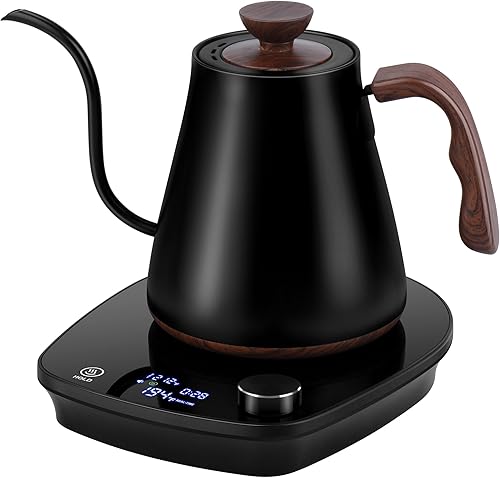
Gooseneck Electric Kettle, Intelligent Temperature Control
Smaller and cheaper, same principle. The gooseneck spout is a bonus rather than the point for matcha — but if you also make pour-over coffee, one kettle now covers both rituals.
Check Price on Amazon
CIRCLE JOY Rechargeable Milk Frother, Handheld
For matcha lattes specifically, a handheld frother does two jobs: it breaks up the powder faster than a whisk and it foams the milk afterwards. Rechargeable rather than AA-powered, which after a year is the difference between using it and not.
Check Price on Amazon
Bonsenkitchen Milk Frother for Coffee, Battery
Fifty-seven thousand ratings. It is not elegant and it is not rechargeable, but it is the frother that has been in more kitchens than any other and it does exactly one thing reliably for about the price of two coffees.
Check Price on Amazon
Typhur InstaWhisk Electric Milk Frother
A newer, sturdier take with a proper motor rather than a vibrating pen. Small review count because the listing is recent, but the build quality is visible in the weight. For someone making two matcha lattes a day, it is the one that will still be working next year.
Check Price on AmazonMaking one bowl, properly
Sift first. One to two teaspoons of matcha through a fine mesh into the bowl. Matcha compacts in the tin and those clumps will not dissolve — they break into grit.
Add a splash, make a paste. Two tablespoons of water at 80°C, whisked into a smooth paste before the rest goes in. This is the step that removes lumps for good.
Whisk in a W, not a circle. Fast, from the wrist, keeping the whisk near the surface. Circles push the powder to the sides; a W shape drags air in and builds the foam in about fifteen seconds.
Store it cold and dark. Matcha oxidises fast and dulls from bright green to olive within weeks on a warm counter. An airtight tin in the fridge, and buy small quantities more often.
Pin this guide
- Pin title: 25 Matcha Essentials for a Café-Quality Bowl at Home
- Hooks: Why Your Matcha Tastes Bitter · The 80°C Rule That Changes Everything · Build a Matcha Bar on Your Counter
- Description: Twenty-five matcha essentials — chasen whisks, ceramic bowls, sifters, temperature-controlled kettles and frothers — plus the two mistakes that make matcha taste bitter.